

In today’s digital world, user experience (UX) design is more than a trend; it is essential for business success. Companies that focus on UX consistently achieve higher customer satisfaction, better conversion rates, and stronger loyalty. For decision-makers, understanding how UX affects form completions, lead quality, and user trust is key to driving results.
This post covers UX design principles, their role in boosting conversions, and practical strategies for integrating UX into your digital initiatives.
What is UX Design?
Definition and Core Principles
UX design focuses on creating products that deliver meaningful and relevant experiences. It covers the entire user journey, from first contact with a website or product to ongoing interaction and support.
Core UX principles include:
Usability
- Interfaces should be easy to use and navigate so users can complete tasks quickly and without confusion.
Accessibility
- Design must work for users of all abilities, including those using assistive technologies or alternative navigation methods.
Consistency
- Experiences should remain consistent across pages and touchpoints so users understand how the system behaves.
Feedback
- Interfaces should provide clear responses to user actions, such as confirmations, loading indicators, or validation messages.
Empathy
- UX design requires understanding user needs, frustrations, and motivations to create solutions that address real problems.
Importance in Modern Business
UX design helps businesses stand out in competitive markets. According to Forrester research, every $1 invested in UX can return up to $100 in value, representing a 9,900 percent ROI.
Good UX reduces friction in digital interactions, increases engagement, and builds trust. These improvements directly affect metrics such as form completions, lead quality, and conversion rates.
UX Design vs. UI Design
UX and UI design are closely related but focus on different aspects of the digital experience.
UX Design
- Focuses on the overall user journey and satisfaction
- Includes research, user flows, and usability planning
- Ensures experiences are effective and intuitive
UI Design
- Focuses on visual and interactive elements
- Includes colors, typography, buttons, and layout
- Ensures the interface looks appealing and supports interaction
UX design defines how the experience works, while UI design defines how the experience looks and feels.
Learn more: What’s the Difference Between UX and UI?
The Role of UX Design in Conversion Rate Optimization
How UX Impacts Conversion Rates
Conversion rate optimization (CRO) focuses on increasing the percentage of visitors who complete a desired action, such as submitting a form or making a purchase.
UX design supports CRO in several ways:
Reduces Friction
- Simple forms and intuitive navigation help users complete tasks without frustration.
Builds Trust
- Clear messaging, transparent processes, and professional design increase user confidence.
Guides Behavior
- Layout structure and visual hierarchy direct users toward important actions such as signing up or requesting information.
Key UX Elements That Drive Conversions
Several UX elements strongly influence conversion performance.
Form Design
- Short, logical forms with clear labels and helpful instructions improve completion rates.
Page Speed
- Fast-loading pages prevent users from leaving before interacting with the content.
Mobile Optimization
- Responsive design ensures usability across smartphones, tablets, and desktops.
Error Handling
- Clear error messages and validation help users quickly correct mistakes.
Social Proof
- Testimonials, reviews, and trust badges build credibility and encourage action.
Case Studies: Improved Conversion Through UX
Real-world examples show the impact of UX improvements.
Example 1
- A SaaS company reduced form fields from eleven to four, increasing sign-ups by 120 percent.
Example 2
- An e-commerce retailer improved mobile navigation, increasing checkout conversions by 30 percent.
Example 3
- A B2B provider added real-time form validation, improving lead quality and reducing follow-up time for sales teams.
Read more: How UX Drives Business Results
Understanding User Experience
Components of User Experience
User experience includes several important dimensions.
Usability
- The ease with which users complete tasks.
Desirability
- The emotional response users have to design, branding, and visuals.
Accessibility
- Inclusive design that supports users with different abilities and technologies.
Credibility
- The trustworthiness of the website, including design quality and clear messaging.
Usefulness
- The practical value that features and content provide to users.
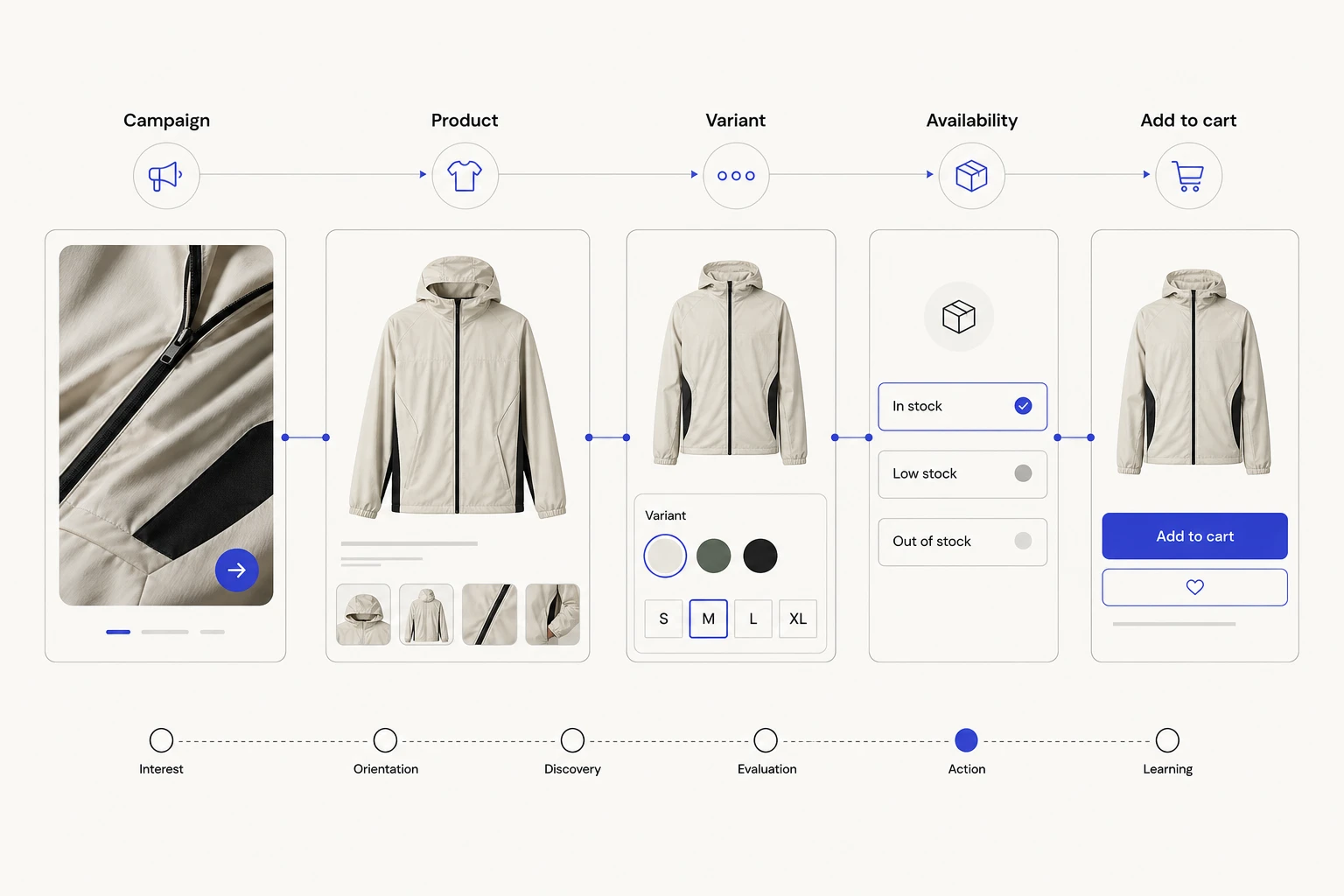
Mapping the User Journey
Mapping the user journey helps identify friction points and opportunities for improvement.
Key steps include:
Persona Development
- Define target users and understand their goals and motivations.
Touchpoint Identification
- Identify every interaction users have with your brand.
Journey Mapping
- Visualize the path users follow from initial awareness to final conversion.
Pain Point Analysis
- Highlight areas where users experience confusion or drop off.
Measuring User Experience Effectively
Effective UX measurement combines qualitative and quantitative research.
Surveys and Interviews
- Collect direct feedback from users about their experiences.
Usability Testing
- Observe real users completing tasks to identify issues.
Analytics
- Track metrics such as bounce rate, time on page, and conversion rates.
Net Promoter Score (NPS)
- Measure customer satisfaction and likelihood to recommend the product or service.
UX Design Best Practices for Business Decision-Makers
Aligning UX with Business Goals
UX initiatives should support broader business objectives.
Key steps include:
- Defining success metrics tied to business KPIs
- Prioritizing user journeys that influence revenue or lead generation
- Setting clear project objectives for stakeholders
Aligning UX with business goals ensures that design improvements generate measurable value.
Collaborating Across Teams (Ops and Marketing)
Successful UX design requires collaboration across departments.
Important contributors include:
Operations
- Ensures design solutions are technically feasible and scalable.
Marketing
- Aligns messaging and branding with user expectations.
Sales
- Shares insights about user objections and common questions.
Regular workshops and shared documentation help teams stay aligned and speed up decision-making.
Common UX Mistakes to Avoid
Avoiding common mistakes improves the effectiveness of UX initiatives.
Skipping User Research
- Designing based on assumptions often leads to ineffective solutions.
Complex Interfaces
- Overly complicated designs reduce engagement and increase frustration.
Ignoring Mobile Users
- Mobile-first design is essential in modern digital environments.
Inconsistent Branding
- Disconnected visual and messaging experiences reduce trust.
No Iteration
- Continuous improvement is necessary for long-term success.
Implementing UX Design Strategies
Conducting User Research
User research reveals real needs, behaviors, and expectations.
Common research methods include:
Surveys and Polls
- Gather quantitative data from large groups of users.
Interviews
- Provide deep insights into motivations and frustrations.
Field Studies
- Observe users interacting with products in real environments.
Prototyping and Testing
Prototyping allows teams to test ideas before committing to full development.
Low-Fidelity Prototypes
- Simple sketches or wireframes used for early feedback.
High-Fidelity Prototypes
- Interactive designs used for usability testing.
A/B Testing
- Compare multiple design versions to determine which performs better.
Iterative Improvement and Feedback Loops
UX design should be an ongoing process.
Collect Feedback
- Use analytics and user input to identify friction points.
Implement Changes
- Focus on high-impact improvements first.
Repeat Testing
- Validate changes and continue refining the experience.
Tools and Resources for UX Design
Popular UX Design Tools
Common design tools include:
Figma
- A collaborative design and prototyping platform.
Sketch
- A vector-based interface design tool used widely in product teams.
Adobe XD
- An integrated design and prototyping environment.
Analytics and Testing Platforms
These tools help measure user behavior.
Google Analytics
- Tracks website traffic, engagement, and conversions.
Hotjar
- Provides heatmaps and session recordings to visualize user behavior.
Optimizely
- Enables A/B testing and experimentation.
Training and Certification Options
Professionals looking to build UX skills often use:
Nielsen Norman Group
- Industry-leading UX training and certification programs.
Interaction Design Foundation
- Accessible courses covering UX principles and practices.
Coursera and edX
- University-backed programs and UX specializations.
Key Takeaways
- UX design plays a major role in improving user experience and conversion rates.
- Aligning UX initiatives with business goals helps maximize return on investment.
- Continuous testing and iteration are essential for long-term success.
- Collaboration between operations, marketing, and design teams produces better outcomes.
People Also Ask
What is the difference between UX and UI design?
- UX design focuses on the overall user experience and journey, while UI design focuses on visual and interactive elements such as layouts, colors, and buttons.
How does UX design improve conversion rates?
- UX design improves conversions by reducing friction, building trust, and guiding users toward important actions like form submissions or purchases.
What are the key elements of a successful user experience?
- Important elements include usability, accessibility, desirability, credibility, and usefulness.
How can businesses measure the ROI of UX design?
- Businesses can track metrics such as conversion rates, lead quality, user satisfaction, retention, and engagement levels.
What tools are recommended for UX design and testing?
- Popular tools include Figma, Sketch, Adobe XD, Google Analytics, Hotjar, and Optimizely.
Conclusion
Recap of UX Design’s Impact on Business Success
UX design plays a critical role in driving form completions, improving lead quality, and building user trust. Organizations that prioritize UX consistently achieve higher conversion rates and stronger customer loyalty.
Next Steps for Decision-Makers
Review your current digital experiences and identify friction points that affect user behavior. Prioritize UX improvements that support business goals and measurable outcomes.
Encouragement to Prioritize User Experience
User experience is a core component of digital success. By applying UX design principles and continuously refining your digital products, businesses can improve conversions and build lasting relationships with their customers.
For personalized support, explore our UX consulting services or contact our team to discuss your next project.