Explore Case Study
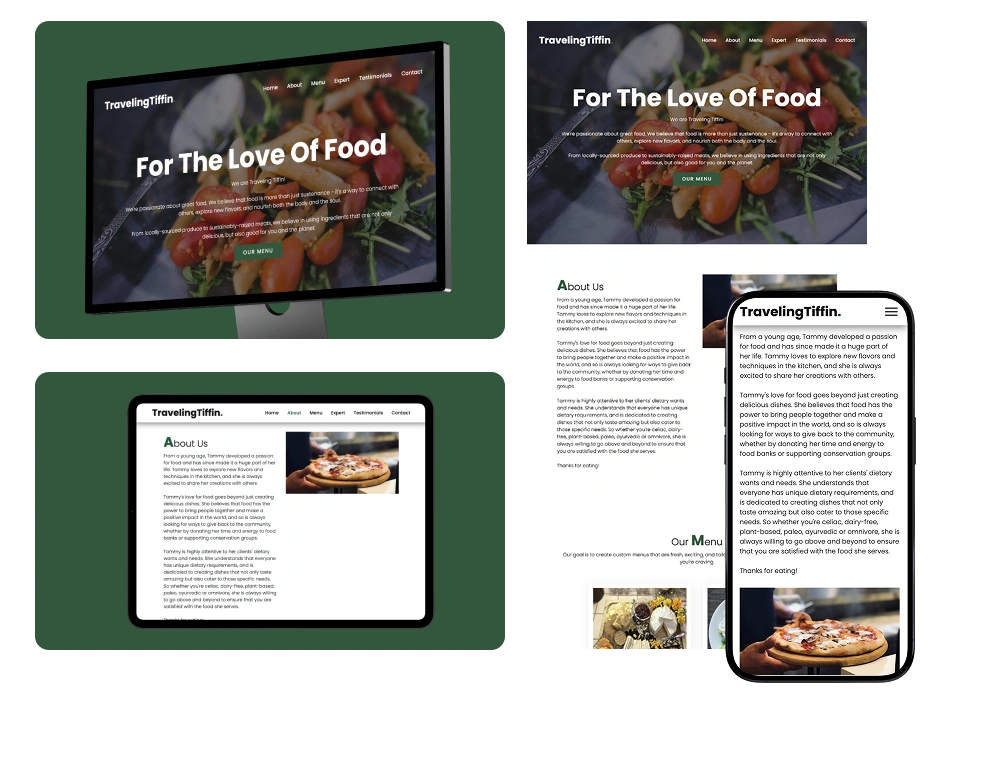
Traveling Tiffin
App Development, Web Design,


Drive Online Orders. Boost Table Turnover. Build Loyalty.
F&B operators face a margin crisis: labor shortages, supply chain volatility, and FDA compliance hurdles. The National Restaurant Association reports 95% of operators cite higher costs. Guests demand seamless digital ordering. We modernize your stack by integrating POS data, inventory management (HACCP), and D2C channels to protect margins and boost RevPASH.


We've partnered with restaurant groups, CPG brands, and distributors to drive revenue and build lasting loyalty.


Eroding margins due to third-party delivery fees
Fragmented guest data across POS and reservation apps
Navigating Food and Drug Administration (FDA) labeling and FSMA compliance
High staff turnover affecting service consistency
Difficulty differentiating CPG products on digital shelves
Operator margins are down 15% industry-wide. We optimize your digital stack to reclaim lost revenue.
We integrate culinary operations and digital marketing to accelerate brand growth, reducing food waste and owning the customer relationship.


Taste is visual. We deploy geo-targeted social ads and email automation that fill seats and drive repeat Consumer Packaged Goods (CPG) purchases.

Food is emotional. Professional culinary photography and recipe videos validate quality, stopping the scroll and triggering cravings.

We have the tools to help you grow in the Food & Beverage sector. Get in touch with our team to discuss how our comprehensive solutions can drive revenue for your brand.

On Average, Our F&B Clients See:
We understand F&B nuances. From shelf life to table turnover, we tailor the solutions to meet them head-on.

Multi-unit operators navigate thin margins. We unify digital menus, integrate central kitchen inventory, and build loyalty apps that maximize revenue per seat.

Shelf space is competitive. We build Shopify storefronts optimized for subscriptions, manage FDA labeling compliance, and run social ads that drive recurring revenue.

Franchisors need brand control. We build localized microsites that respect brand guidelines while giving franchisees tools to drive local SEO and foot traffic.

Experience is everything. We design immersive reservation flows integrating SevenRooms, ensuring VIP guest data is captured and leveraged before they arrive.

B2B supply chains are digitizing. We build wholesale portals that streamline ordering for chefs, track inventory in real-time, and reduce waste for your clients.

Delivery-only models rely on tech. We aggregate delivery platforms into one Kitchen Display System (KDS), optimize menu engineering for travel, and reduce reliance on third-party fees.
We've partnered with restaurant groups and food brands to grow their revenue and strengthen their reputation.
"The new ordering system cut delivery fees by 20%. We finally own our guest data."

"Their POS integration saved us 15 hours of admin a week. Margins are finally healthy."

"We launched our D2C line on Shopify. Sales doubled and subscription retention is up."

"They revamped our reservation flow. Table turnover improved and no-shows dropped."

Recognition for award-winning digital work across strategy, design, and execution.
Trusted by ambitious teams in the food and beverage sector and other highly competitive industries.
cssdesignawards.com

we-awards.com
clutch.co


A high-performing food website is just the start. Our digital marketing services help drive orders, increase foot traffic, and boost loyalty.

Automate loyalty and follow-up to turn one-time guests into regulars.

Dominate local searches and drive more foot traffic.

Reach nearby customers with high-ROI Instagram and TikTok ads.

Build buzz with foodie-friendly content and creator partnerships.

Run automated offers and updates that keep customers coming back.
When customers search for places to eat, drink, or order in DC, your brand should show up first.
We strengthen technical SEO, location content, and on-page performance to drive visits and orders.
Answers to common questions from restaurateurs, CPG marketers, and hospitality groups.
Design In DC works with food and beverage brands across consumer and commercial segments.
Clients include consumer packaged goods companies, restaurants, hospitality groups, beverage producers, distributors, and specialty food organizations. Engagements range from emerging brands entering the market to established companies refining positioning and expanding distribution.
Each project reflects the operational model, audience expectations, and growth stage of the brand.
Food and beverage brands compete through perception, quality signals, and brand loyalty.
Website design must communicate product value, sourcing transparency, certifications, menu clarity, and brand story without overwhelming visitors. Visual hierarchy, product photography, and intuitive navigation influence purchasing decisions and distributor inquiries.
Specialized design ensures that storytelling supports conversion rather than distracting from it.
We combine visual identity, structured information architecture, and performance optimization to strengthen digital presence.
Product pages are organized for clarity, ingredient transparency, and compliance labeling where required. Navigation supports retail, direct to consumer, and wholesale pathways depending on business model.
The result is a digital experience that reinforces brand credibility while guiding users toward purchase or partnership actions.
Yes. SEO strategy is integrated into food and beverage website architecture from the beginning.
Keyword research aligns with product categories, ingredient searches, local intent for restaurants, and distributor queries for wholesale operations. Technical structure, metadata configuration, and performance optimization support long term discoverability.
Content development aligns with how customers and buyers search for products in this category.
Yes. We design websites for both B2C and B2B food and beverage brands.
Consumer focused sites prioritize product storytelling, ecommerce flow, retail location visibility, and brand engagement. B2B sites emphasize specifications, certifications, distribution capabilities, and inquiry workflows.
Site structure is adapted to the buying journey and decision criteria of the target audience.
Yes. We redesign and modernize existing food and beverage websites that no longer reflect current positioning or performance standards.
Redesign efforts address outdated visuals, inconsistent messaging, navigation friction, and technical limitations. Content can be restructured to better align with product lines, seasonal campaigns, and growth objectives.
The updated platform supports marketing execution while maintaining brand continuity.